Guides
Florist quality checks owners actually run
Florist owners check vase life, cold chain, hydration, and stem cost on a set walk, not on a borrowed benchmark. Here are the checks shops run daily.
What to take away
- The florist quality checks owners actually run start with the daily walk: cooler temperature, bucket water, stem ends, and finished arrangements.
- Check cooler air with a calibrated probe, not the wall gauge. Testo 108 or ThermoWorks Thermapen typically costs $70 to $120.
- Mix flower food to label dose with Floralife Flower Food 300 or Chrysal Clear Universal. Dump cloudy water, re-cut stems, wash the bucket.
- Price a bunch from stem cost per stem, not from the bouquet price you charged last year.
- Write the check down with a date and a version, and pull superseded copies off the bench.
- Sourcing, staffing, and border paperwork each have an owner and a review date.
- A check nobody records is a check nobody can fix.
This article covers shop practice. It is not licensing, tax, employment or safety advice. Those duties vary by province, state and municipality, so confirm them with the authority that sets them.
The opening walk, before the door opens
The walk takes ten minutes and follows the same route every morning. Cooler first. Then the buckets on the floor, the design bench, and the van.
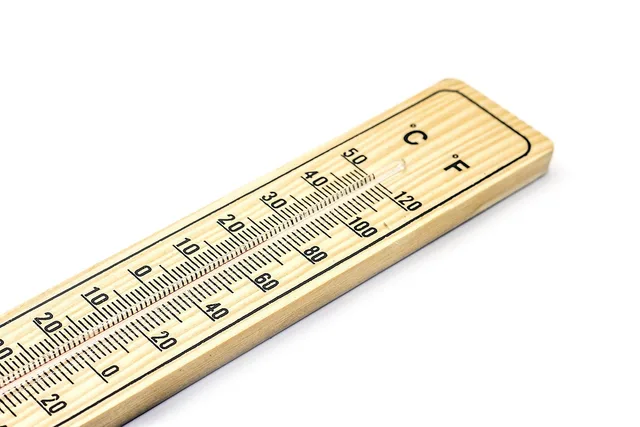
In the cooler, check air temperature against the setpoint and the last reading. Use a calibrated probe thermometer such as a Testo 108 or ThermoWorks Thermapen.
Most cut flowers hold at 34 to 38 F. Tropicals such as orchids and anthuriums need 55 to 60 F. A cooler drifting two degrees overnight shows up as limp stock two days later, not as a broken compressor.
On the floor, check water level and stem ends in every bucket. Cloudy water, slime on the stems, or a brown cut end means the bucket gets dumped, the stems get re-cut, and the bucket gets a wash. Use a disinfectant bucket scrub, not a rinse.
Mix flower food to label dose. Floralife Flower Food 300 and Chrysal Clear Universal are common commercial choices. Dose per label, not by eye.
At the bench, check anything already arranged and waiting. A finished piece sitting in the cooler since yesterday gets pulled, inspected, and either sold today at a markdown or broken for parts.
Set one stem from each incoming variety in a labeled jar with flower food. Check it daily against the variety's typical vase life: roses 5 to 7 days, carnations 7 to 14 days, lilies 7 to 14 days. If it collapses early, claim credit.
In the van, check the refrigeration is running before the first delivery leaves. A van that will not hold temperature in July is a route that cannot carry lilies.
What the checks are looking for
| Check | Where | Pass looks like | Fail action |
|---|---|---|---|
| Cooler air temperature | Cooler | 34 to 38 F for most cut flowers, matching the log | Log it, call refrigeration service |
| Cooler humidity | Cooler | 80 to 90 percent relative humidity | Add humidifier, adjust vents |
| Pulp temperature | Receiving | Within 2 F of the setpoint | Move stock, check cooler |
| Bucket water | Floor and cooler | Clear, stems cut, no slime | Dump, re-cut, wash bucket |
| Flower food dose | Bucket mixing station | Label dose of Floralife 300 or Chrysal Clear | Remix, dump old water |
| Stem end | Every bucket | Clean cut, firm, no brown | Re-cut above the damage |
| Vase life sample | Design bench | Meets variety minimum: roses 5 to 7 days | Reject or credit with supplier |
| Finished arrangements | Cooler shelf | Sold today or broken for parts | Markdown or disassemble |
| Van refrigeration | Loading bay | Running and holding before departure | Swap vehicle or re-route |
| Rose head firmness | Receiving | Firm, no dropping petals | Reject or credit with supplier |
| Ethylene damage | Cooler | No yellowing, dropped petals, or bent necks | Remove affected stock, ventilate, use EthylBloc per label |
| Water uptake | Bucket | Stems drink after re-cut | Re-cut, discard if no uptake |
Rose head firmness is the one owners check by hand at receiving. Squeeze the head gently. If the petals separate and the head feels soft, the box goes back on the truck and the credit is claimed the same day.
Ethylene damage shows as yellowing leaves, dropped petals, or bent necks. Remove affected stems from the cooler and ventilate. Some shops use an ethylene inhibitor such as EthylBloc in storage, following the label.
Pricing a bunch from the stem up
Bouquet pricing starts at stem cost, not at last season's ticket. Count the stems in the bunch, add the wrap, the ribbon, and the card, then add the labor minutes at your own shop rate.
Wholesale stem costs vary by variety, stem length, season, origin, and freight. In most U.S. markets as of 2026, standard roses typically run $0.50 to $1.50 per stem. Spray roses run $0.60 to $1.25. Oriental lilies run $1.50 to $3.50. Carnations run $0.25 to $0.60. Hydrangeas run $2.50 to $5.00.
The arithmetic is yours to fill in: (stem cost x stem count) + wrap + labor minutes x shop rate + waste allowance = cost floor. Markup goes on top of that floor, not on top of the old price.
A typical U.S. shop labor rate is $18 to $30 per hour including payroll taxes. Wrap, ribbon, and card typically add $1.50 to $4.00 per bouquet. Waste or shrink typically runs 10 to 20 percent of stems received.
Example with typical inputs: a 10-stem rose bouquet at $1.00 per stem costs $10.00 in stems. Add $2.00 wrap, 15 minutes at $22 per hour ($5.50), and 15 percent waste ($1.50). The cost floor is $19.00. A 3x markup puts the retail ticket at $57.00.
Waste is the number owners forget. Every bunch carries a share of the stems that never sell. Track shrink as a percentage of stems received each week and feed it back into the cost floor.
Underpriced bundles are the common failure. A ten-stem mixed bunch priced to beat the supermarket usually loses money once labor and shrink are counted.
Sourcing, staffing and the border
Sourcing runs on a standing order with a named grower or wholesaler, plus a substitution rule for what arrives short. The rule says who may swap a variety and who may not.
Staffing turns on holidays. Valentine's, Mother's Day, and the winter wedding season need seasonal hires booked weeks ahead. The terms of those hires come from your provincial or state employment standards office, not from a template.
Cross-border trade brings CFIA and CBSA into the order. Import paperwork, phytosanitary documents, and broker arrangements are decisions for a licensed customs broker and the current CFIA directive, not for a shop checklist.
For market positioning and where to sell, see florist business markets.
Versioning the standard
Every written check carries an effective date, an owner, and a version number. The current version lives in one place staff can find without asking.
Superseded copies come off the bench and out of the binder. A laminated card from two seasons ago still taped to the cooler door is the version someone will follow.
When the written rule and the real work disagree, staff report the conflict to the owner that day. The report is the signal that the standard needs a revision, not that the rule can be ignored.
The U.S. Bureau of Labor Statistics describes floral designers as ordering, processing, arranging, pricing, and caring for flowers while consulting customers and coordinating deliveries. Demand is driven by holidays and events. That is the work the checks protect.
For recordkeeping, the IRS explains what records a small business should keep: a system that clearly shows income and expenses, with documents supporting purchases, sales, payroll, and assets. Your accountant sets the retention period for your jurisdiction.
For the people side, OSHA's safety management guidance describes finding and fixing hazards before an injury or inspection does it for you. Chemical handling and preservative exposure limits belong with the product SDS and your workplace safety authority.
Common questions
How often should the walk happen?
Every morning before the door opens, and again before the afternoon delivery run leaves. Holiday weeks add a mid-day pass on the cooler. The route and the checks stay the same. Only the frequency changes.
Who owns the checks?
The owner or a named senior designer owns the standard and its version. Whoever opens the shop runs the walk and logs the readings. One person signs the log each day.
What do I do when a check fails?
Fix what you can on the spot, log the failure, and hand anything you cannot fix to the owner with a date. A repeated failure means the standard or the equipment needs changing, not that the check should be dropped.
Does this replace a compliance program?
No. It is shop practice for stock, pricing, and paperwork. Licensing, tax, employment terms, and chemical safety come from your provincial or state authority, the CRA or IRS, and the product SDS.