
Guides
Edmonton winter florist guide: cold chain, vans and staffing
A florist guide to Edmonton winter operations, with cold-chain targets, delivery van heating, seasonal staffing, receiving steps and workplace safety.
What to take away
- This florist guide covers what actually breaks in an Edmonton winter: cold-chain storage, van heating, holiday staffing and safety duties.
- Cold-chain storage means holding flowers near 2 to 4 C with high humidity, checked with a thermometer, not by feel.
- Delivery vans need heat that reaches the cargo area, plus a plan for idling, plug-ins and blocked routes.
- Holiday demand spikes are won or lost on scheduling and on seasonal staff hired under Alberta employment standards.
- Alberta's Occupational Health and Safety Act and Code set legal duties; CCOHS offers practical safety and ergonomics guidance.
- A written checklist beats memory when the temperature outside is minus 25 C.
Why Edmonton's short northern growing season changes florist guide planning
Edmonton sits at the northern edge of commercial cut flower production. The local growing season is short, so most stems arrive from elsewhere: British Columbia greenhouses, Ontario, imported stock cleared through the Canada Border Services Agency. Check the Canadian Food Inspection Agency's Automated Import Reference System (AIRS) for cut-flower requirements by species and country of origin. For customs accounting, ask your broker about the CBSA Commercial Accounting Declaration (CAD) and the CARM Client Portal documents required for your shipment.
That means your shop depends on a supply chain you do not control. A delayed truck in Saskatchewan or a customs hold can land flowers on your dock already stressed. In January, that delay costs more than in June.
Northern Alberta florists also sell against a compressed calendar. Weddings cluster into a few warm months. Funerals and hospital work run year round. Holiday demand lands in the darkest, coldest weeks.
Plan for the season you have, not the one in a catalogue. Build slack into ordering, keep a buffer of hardy stems, and treat cold-chain storage as your main defence against shrink.
Your equipment choices follow from that. Reading equipment and setup with a sceptical eye helps you judge coolers and vans by Edmonton conditions rather than showroom claims.
Cold-chain storage for Edmonton flower shops
Cold-chain storage specifications start with temperature and humidity, not with a brand. Most cut flowers hold best between 2 and 4 C at 90 to 95 per cent relative humidity. Tropicals are the exception and need warmer air.
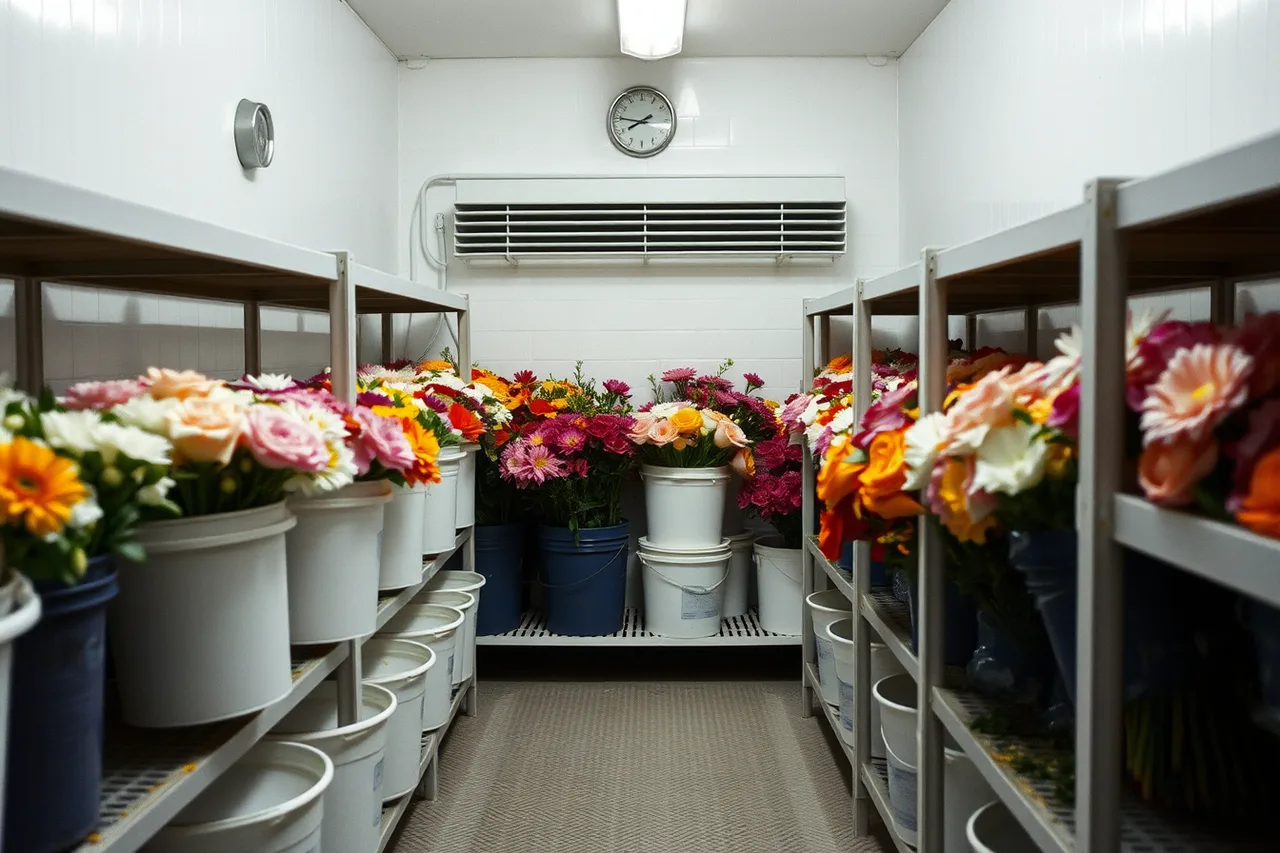
A single walk-in cooler set to one temperature forces compromises. If you carry orchids, anthuriums or similar, give them a separate zone or accept shorter vase life.
Air movement matters as much as the thermostat. Flowers packed tight against a wall freeze at the coil and rot in the middle. Leave space for circulation and rotate stock so older buckets come out first.
What to check every morning
- Cooler air temperature at the coil and at shelf height
- Humidity reading against your target range
- Bucket water level and cleanliness
- Any stems showing botrytis, yellowing or limp necks
- Door seals and strip curtains sitting flush
- Backup thermometer reading versus the controller display
- Delivery van cargo temperature before loading
Two thermometers, one digital and one alcohol, catch a drifting controller before you lose a week of stock. Log the readings. When a supplier disputes a quality claim, your log is the evidence.
Steps for receiving flowers in a cold snap
Receiving flowers in a cold snap
- Unload into a staging area kept above freezing, never straight onto a dock at minus 25 C.
- Unwrap and inspect each bunch under light, checking for frozen petals and blackened edges.
- Recut stems and strip lower foliage before they go into water.
- Move stock into the cooler in small loads so the door is not held open.
- Record supplier, arrival time, condition and cooler temperature in your log.
Written operating procedures keep those steps identical whether you or a seasonal hire is on the receiving door.
Vehicle heating and delivery prep through a northern winter
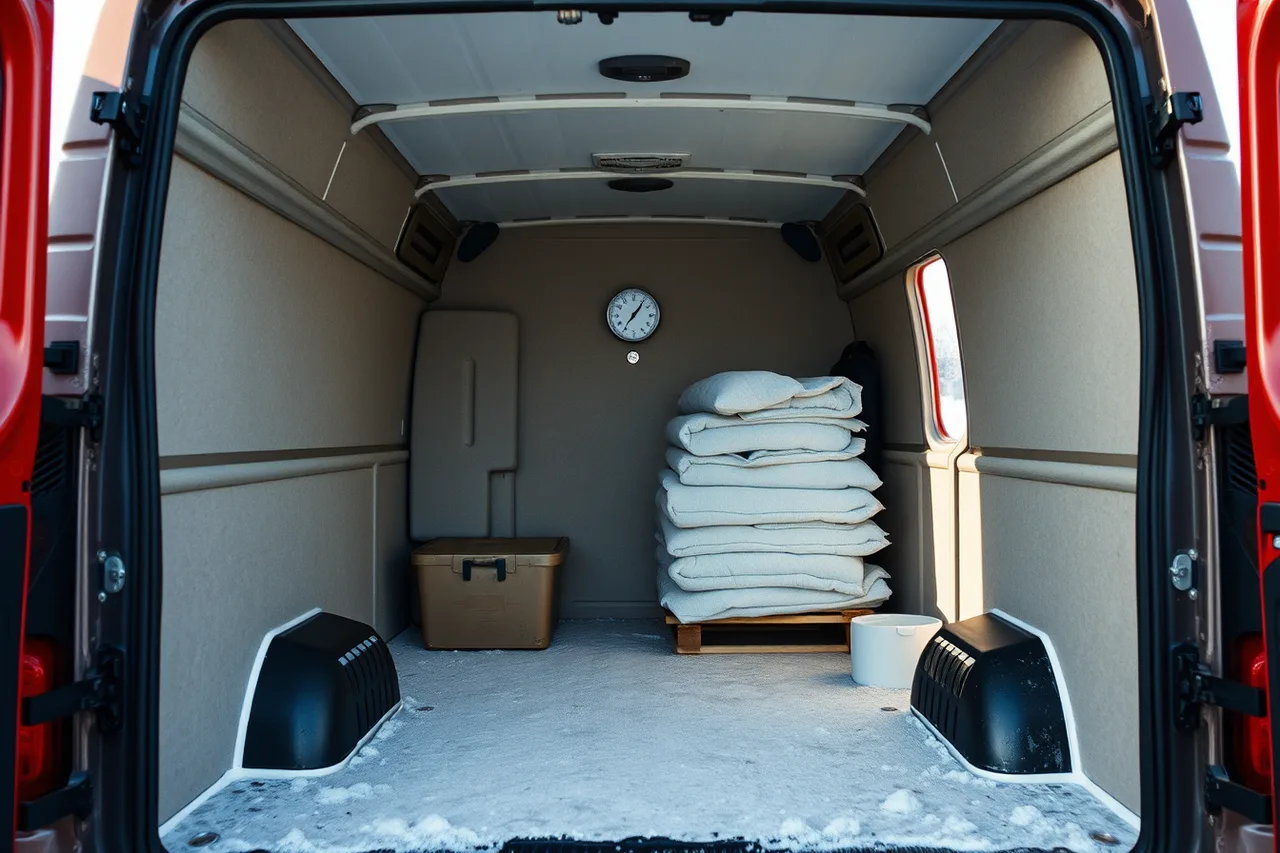
A delivery van is a moving cooler that you want to keep warm. Heat has to reach the cargo area, not just the cab. Many vans blow warm air forward and leave the box cold.
For extra-provincial commercial transport, the federal Motor Vehicle Transport Act and Commercial Vehicle Drivers Hours of Service Regulations may apply. Alberta's Traffic Safety Act and Commercial Vehicle Safety Regulation also govern relevant provincial vehicle requirements. Confirm which rules apply to your vehicle, route and driver before you add a second van or a new driver.
Practical winter prep for Edmonton routes:
Vehicle heating and delivery prep
- Fit a block heater or use a plug-in at the shop, and a battery blanket if the van sleeps outside.
- Insulate the cargo bay and add a partition so cab heat stays in the load space.
- Carry blankets, thermal boxes and a thermometer in the cargo area.
- Keep the fuel tank above half and a scraper, booster cables and sand or grit on board.
- Build routes so the longest stop is not the last one of the day.
Edmonton flower delivery in January is a routing problem as much as a heating problem. A van idling outside a hospital for twenty minutes loses more heat than the drive between stops.
Group deliveries by area, call ahead for condo and office towers, and set a maximum time per stop. If you cannot schedule florist orders into tight windows, the flowers sit in a cooling van while you hunt for a buzzer.
Keep one van off the road as a spare in the weeks around Valentine's Day and Christmas. A dead battery on a minus 30 C morning is not a repair, it is a lost day of sales.
Holiday demand spikes and staffing for Edmonton florists
Holiday demand in Edmonton concentrates into a few brutal weeks. Valentine's Day, Mother's Day, Christmas and the December party season carry a disproportionate share of annual revenue.
Those peaks also collide with the worst weather. Staff get sick, roads close, suppliers run late. The shop that plans in November has a calmer February.
Start hiring four to six weeks before a peak. Seasonal staff need time to learn your cooler layout, your wrapping standards and your delivery zones before the phones stop ringing.
Where the volume actually comes from
Where the volume comes from
| Peak | Typical demand | Operational strain |
|---|---|---|
| Valentine's Day | Roses, mixed bouquets, same-day delivery | Route density, phone volume, cooler space |
| Mother's Day | Arrangements, planters, family orders | Design bench time, Sunday delivery |
| December | Corporate accounts, parties, gifts | Invoicing, bulk orders, cold-weather delays |
| Wedding season | Ceremony and reception work | Weekend labour, advance design time |
Corporate accounts in downtown Edmonton often order in bulk for December events. Those orders reward early quoting and clear cut-off dates.
Keep a short list of trained former staff you can call. Rehiring someone who already knows your working rhythm costs less than training a stranger in a peak week.
Good florist inventory planning pays off on a sample of peak-week orders. Substitutions and rushed wrapping show up fastest when volume is highest.
Alberta employment rules for seasonal florist operations
Seasonal hiring in Alberta is governed by the provincial Employment Standards Code, not by informal arrangement. Alberta's employment standards cover minimum wage, hours of work, overtime, rest periods, general holidays and termination.
Read the current standards before you write a seasonal contract. They set out what you owe a temporary employee and what records you must keep.
Key points for a flower shop:
Alberta employment rules
- Pay at least minimum wage for every hour worked, including trial shifts.
- Track hours properly, because overtime thresholds apply to seasonal staff too.
- Give required rest breaks and general holiday pay where the rules call for it.
- Keep payroll and hours records for the period the legislation requires.
- Issue clear start and end dates for seasonal roles in writing.
Some shops bring in workers through the federal temporary foreign worker program when local hiring falls short. That route carries extra obligations on wages, housing and conditions, so get advice before relying on it.
Remember GST/HST registration and filing through the Canada Revenue Agency once you pass the small supplier threshold. Seasonal revenue counts toward that threshold.
Health and safety duties in a cold-weather shop
Alberta's Occupational Health and Safety Act and Occupational Health and Safety Code set employers' health and safety duties. CCOHS materials are a practical source of guidance, but the provincial legislation establishes the legal requirements.

Alberta requires a written health and safety program when an employer regularly employs 20 or more workers. CCOHS guidance on health and safety programs explains what a program should contain and how to keep it current.
For a florist, the main hazards are mundane and cumulative:
Health and safety duties
- Cold exposure on the dock and during deliveries
- Slippery floors from spilled water and melted snow
- Cuts from knives, snips and wire
- Repetitive strain from stripping, wiring and arranging
- Lifting buckets, boxes and planters
Ergonomics deserves its own attention. CCOHS ergonomics guidance covers repetitive tasks, posture and workstation setup, which maps directly onto a design bench.
Adjust bench height, keep tools within reach, rotate tasks through the day and give staff a mat to stand on. Small changes prevent the wrist and shoulder injuries that end careers.
Cold-weather work needs its own controls: warm breaks, dry gloves, gritted walkways and a rule that nobody works alone on the dock in extreme cold. Document the training.