Guides
Florist trends compared: what actually changes for buyers in 2027
Four florist trends for 2027 compared on cost, labour, waste, delivery logistics and buyer behaviour, with the checks that show which one fits a shop.
What to take away
Florist trends compared on cost, labor, waste and delivery come down to five named ones, each of which changes something for buyers in 2027.
- The fiveletterbox flowers and pre-order pickup, preserved and sola wood stems, Google Business Profile search, flower walls and event work, and American-grown sourcing.
- Each one moves a different cost line.
- Preserved stems cut cold-chain loss and extend shelf life, and they carry a higher cost per stem than fresh.
- Google Business Profile search is decided by relevance, distance and prominence, not by the size of the shop.
- Event work pays the largest single invoices and carries the longest payment delay.
- For a single-site shop with one cooler and one designer, the first move is letterbox flowers and pre-order pickup: it needs no new equipment and it smooths the holiday week.
This article covers general florist business information, not licensing, safety, tax, employment or contract advice. Requirements vary by state and province.
Five named 2027 trends and what each one changes
Letterbox flowers and pre-order pickup. Bloom & Wild built the letterbox format: stems ship flat in a box that fits a standard mail slot, so the recipient does not have to be home. The Bouqs Co. sells farm-direct subscriptions that arrive on a set cadence.
The customer orders days ahead and collects in store, or receives the delivery at the door. The shop builds on a schedule it sets, so stems are cut to a known list, not guessed at. Labor shifts to the days before the holiday.
Pre-order pickup typically runs on a two-day window before the holiday, with a cut-off 48 to 72 hours before the delivery date. The shop either runs its own van on a fixed route or hands the box to a courier. A box takes about 10 to 15 minutes to process and pack at typical shop speed.
Forty boxes is roughly 7 to 10 hours of work that lands two days before the holiday, not on it. Stems arrive in bud, so the buyer gets roughly five to seven days of vase life, a typical range that moves with variety and conditioning.
Four 2027 florist trends compared
Pre-order pickup
- What changes
- Build schedule
- Cost line
- Holiday-week labour
- Buyer
- Occasion planners
- Payment
- Paid at pickup
Dried and preserved
- What changes
- Cold chain, waste
- Cost line
- Cost per stem up
- Buyer
- Gift, home decor
- Payment
- Paid at sale
Local search
- What changes
- Where buyers find you
- Cost line
- Profile work
- Buyer
- New movers
- Payment
- Paid at sale
Event work
- What changes
- One large order
- Cost line
- Receivables age
- Buyer
- Weddings, corporate
- Payment
- Deposit, long terms
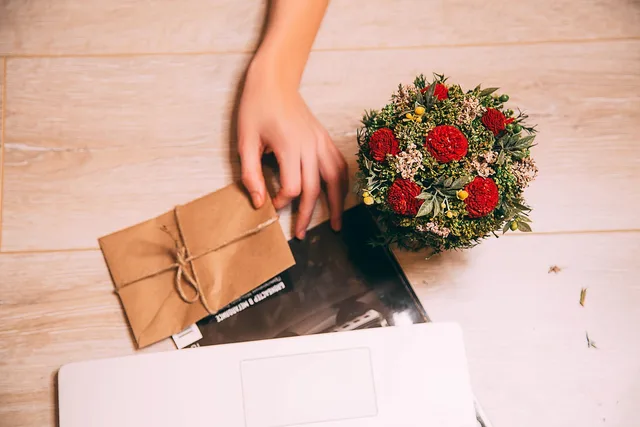
Preserved and sola wood stems. Sola Wood Flowers sells sola wood flowers, a dyeable material that needs no cooler and does not wilt. Knud Nielsen Company is a long-standing supplier of dried and preserved material to the trade. Neither line needs refrigeration.
Cost per stem runs above fresh, and the buyer keeps the arrangement for months. In most markets, a preserved stem commonly costs roughly one and a half to three times a comparable fresh stem at wholesale. The gain is shrink: preserved stock sits through a slow week without loss.
Preserved stems do not wilt, so shrink is breakage and dust, not decay. Measure it as the share of stems you discard from an order. A typical preserved order might lose 2 to 5 percent to breakage, against a fresh order that can lose far more if it sits.
Shelf life commonly runs months, and often a year or more out of direct sun and damp.
Google Business Profile map-pack search. The customer searches "florist near me" and picks from the map pack. Google states that local ranking rests on relevance, distance and prominence.
Complete business information, current hours, reviews and photos support that ranking. A Google Business Profile is free to create and manage, so the cost is staff time for review requests and photo updates.
A workable cadence is one review request after every order and one new photo a month. At 60 orders a week and a 25 percent request rate, that is 15 requests, which at a 30 percent response yields about 5 new reviews a week. Treat those rates as a typical starting range, not a guarantee.
Flower walls and installation event work. Weddings and corporate events arrive as one large order with a fixed date, a site to install in and a contract. Photo-ready flower walls and hanging installations are the pieces planners ask for by name, and they are built for one night.
In most markets, a flower wall rents for roughly $500 to $2,000 per event, and fresh-flower builds sit at the top of that band. The invoice is the biggest a florist writes, and the payment terms are the longest.
Planners typically book six to twelve months ahead for weddings, and two to six weeks ahead for corporate work. Deposits commonly run 25 to 50 percent, with the balance due before install.
American-grown sourcing through Slow Flowers and Certified American Grown. Debra Prinzing started the Slow Flowers movement, and the Slow Flowers Directory lists growers by region. Certified American Grown labels stems grown and processed in the United States. The USDA Floriculture Crops 2023 Summary, released in 2024, reports U.S. floriculture production.
Local stems often cost more per stem and arrive with seasonal gaps, so the line suits a shop with a grower within driving distance. A buyer who asks where a stem was grown is choosing local supply over imported supply.
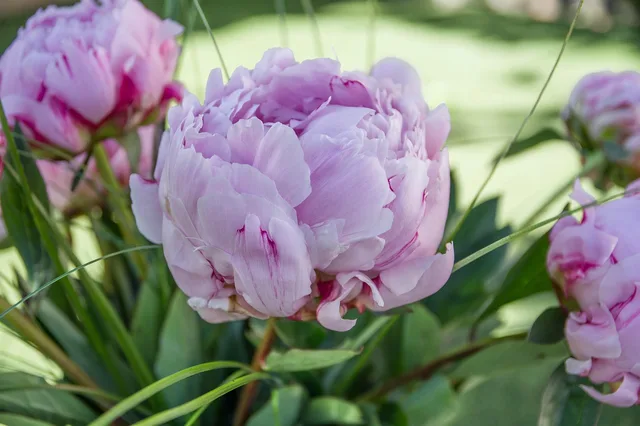
In most markets, a local stem can run 20 to 60 percent above the imported equivalent at wholesale, a typical range that moves with the crop and the week. Peonies come for a few weeks in late spring, and dahlias run from midsummer to first frost.
Five named 2027 trends
What it changes
- Letterbox flowers and pre-order pickup (Bloom & Wild, The Bouqs Co.)
- Build schedule, not walk-in volume
- Preserved and sola wood stems (Sola Wood Flowers, Knud Nielsen Company)
- Cold chain and waste
- Google Business Profile map-pack search
- Where the first call comes from
- Flower walls and event work via planners
- Order size and lead time
- American-grown sourcing (Slow Flowers, Certified American Grown)
- Where the stems come from
Cost line it moves
- Letterbox flowers and pre-order pickup (Bloom & Wild, The Bouqs Co.)
- Holiday-week labor
- Preserved and sola wood stems (Sola Wood Flowers, Knud Nielsen Company)
- Cost per stem, up; shrink, down
- Google Business Profile map-pack search
- Reviews, photos, profile upkeep
- Flower walls and event work via planners
- Design hours, install crew, receivables
- American-grown sourcing (Slow Flowers, Certified American Grown)
- Freight miles, seasonal gaps
Buyer who wants it
- Letterbox flowers and pre-order pickup (Bloom & Wild, The Bouqs Co.)
- Occasion buyers who plan ahead
- Preserved and sola wood stems (Sola Wood Flowers, Knud Nielsen Company)
- Gift buyers, home decor
- Google Business Profile map-pack search
- New movers, same-day buyers
- Flower walls and event work via planners
- Wedding and corporate buyers
- American-grown sourcing (Slow Flowers, Certified American Grown)
- Buyers who ask origin
Buyer-facing figure
- Letterbox flowers and pre-order pickup (Bloom & Wild, The Bouqs Co.)
- Cut-off 48 to 72 hours; pickup window two days before; vase life roughly five to seven days
- Preserved and sola wood stems (Sola Wood Flowers, Knud Nielsen Company)
- Shelf life months to a year; breakage shrink typically 2 to 5 percent
- Google Business Profile map-pack search
- One review request per order; one photo a month
- Flower walls and event work via planners
- $500 to $2,000 per event; deposit 25 to 50 percent
- American-grown sourcing (Slow Flowers, Certified American Grown)
- Local stems typically 20 to 60 percent above imported wholesale
What changes for the buyer
The occasion buyer gets a shorter wait and a firmer price, because the shop knows the stem list before it buys. That is the letterbox and pre-order trend landing. The wait becomes a scheduled pickup window, not a queue.
The gift buyer gets months, not days. Preserved and sola wood work is priced higher per stem and does not need a cooler, so a small shop can hold it without refrigeration.
The new mover finds the shop on the map pack, not in a directory. Reviews decide that, and they accumulate one order at a time.
The buyer also compares the shop with a national price list. FTD and Teleflora post arrangements on their websites and route orders to member shops. Grocery floral sets a floor underneath.
Trader Joe's bouquets commonly sell for under $15 in most markets, and Costco moves roses by the two dozen at warehouse pricing. A walk-in price now sits next to those numbers.
The wedding buyer signs a contract and pays a deposit. Consumer protection rules on deposits, cancellation and delivery dates vary by province and state, so read the current statute for your jurisdiction before you write the clause.
Where the stems come from
Fresh supply still sets the ceiling on what a shop can promise in February. The supplier options list what is available now, including growers, importers and wholesalers.
In most markets, a wholesale rose stem commonly lands between $0.50 and $1.50. Grade, season and freight move that band. Peonies and specialty stems run above it.
Three supply lines matter. Imported stems carry the lowest cost per stem and the longest freight, and specialty crops gap out of season. Domestic stems from a Slow Flowers or Certified American Grown grower cut freight miles and cost more per stem. Preserved material skips the cooler entirely and holds its value through a slow week.
Cross-border buying adds paperwork and delay. The Canada Border Services Agency handles import entry, and the Canadian Food Inspection Agency sets plant health requirements, so an import line needs a customs broker or a named directive.
Staffing the peaks
The roles differ by trend. A floral designer builds. A processor conditions and cuts. An event installer works on site. A driver runs the van.
Flower walls and event work pull the installer and driver out of the shop.
Seasonal hiring rules differ by state and province, so check the employment standards office for your jurisdiction.
The Bureau of Labor Statistics: Floral Designers page describes the floral designer job and lists delivery coordination and customer consultation among the tasks. That is the part event work leans on hardest.
The arithmetic, with your own numbers
Do not borrow a margin. Substitute your own figures:
Three numbers to track monthly
- Landed coststem price + freight + duty + shrink
- Markup(landed cost + design minutes x rate + container + wrap) x (1 + waste factor)
- Holiday capacitydesigner hours in build window / minutes per arrangement
| Line | Formula | Worked example |
|---|---|---|
| Cost per stem | landed cost plus freight and duty, divided by stems received | $120 landed for 100 stems = $1.20 per stem |
| Markup | retail price divided by cost per stem | $3.60 retail on $1.20 = 3.0x markup |
| Holiday labor | boxes multiplied by minutes per box, divided by 60 | 40 boxes at 12 minutes = 8 hours |
| Preserved shrink | stems discarded divided by stems received, times 100 | 3 stems from 100 = 3 percent shrink |
| GBP review cadence | orders per week multiplied by request rate | 60 orders at 25 percent = 15 requests a week |
| Event capacity | design hours plus install hours plus drive hours, against available staff hours | 20 hours of work against 16 staff hours = short by 4 |
Track three numbers monthly: cost per stem, shrinkage, and stem-to-sale conversion.
In most markets, paper, sleeve and ribbon add roughly $1 to $3 to a hand-tied bouquet, and the container is a separate line.
The bookkeeping and cash flow side decides whether the trend pays. Event work can show a large invoice and still starve the account while the receivable ages.
Before committing to a new line, it is worth building florist service packages around real capacity, staffing and cash. The package structure ties the trend to the hours and the money you actually have.
The U.S. Small Business Administration: SBA Business Guide covers the permit, insurance and finance questions that a flower wall or event line raises. Use it as the checklist for that decision, not as a forecast.
Which trend fits which shop
A shop with steady gift traffic and weak refrigeration: preserved and sola wood stems. The line removes a cold-chain failure point.
A shop in a growing suburb with no review history: Google Business Profile work. The profile is free, and the payoff compounds as reviews accumulate.
A shop with a design team and a van: flower walls and event work. It needs a contract, a deposit schedule and a receivables plan before the first booking.
A shop with a grower inside driving distance: American-grown sourcing. Expect seasonal gaps and a higher cost per stem in exchange for a shorter supply chain.
Common questions
What actually changes for buyers in 2027?
They order earlier, they check the map pack before they call, and they expect the arrangement to last. Letterbox and pre-order pickup shorten the wait. Google Business Profile search decides who gets the call, and preserved stems set a longer expectation of life.
How do I price dried and preserved work?
Start from landed cost per stem, then add design minutes, container and a waste factor. Preserved material costs more per stem than fresh, and it does not shrink in the cooler, so the two figures are not comparable without the waste line.
Does event work need different insurance or licensing?
It can, because the work happens on someone else's site. Check with your insurer and the authority that licenses the activity in that jurisdiction. No article can tell you what your policy covers.