
Guides
3 ways Halifax florists absorb port and import costs
Florist bouquet sales in Halifax carry port, CBSA clearance and Maritime seasonality costs; here are three pricing adjustments Nova Scotia shops can make.
What to take away
- Florist bouquet sales in Halifax start with a landed cost, not a wholesale sticker: ocean freight, terminal handling, brokerage and duty all attach before the stems reach your cooler.
- CBSA clearance runs on documentation you or your broker file, and the entry has to be accounted for even when the shipment is small.
- Maritime seasonality splits the yearwinter import dependence, a short local growing window, and Valentine's, Mother's Day and December peaks that decide whether the year works.
- Three adjustments do most of the worka landed-cost markup, a seasonal price band, and a minimum order size.
- Regional wholesalers absorb some import cost, but only if you book early and accept their substitution rules.
How Halifax port access shapes landed flower costs
Halifax is the first Canadian port of call for a lot of North Atlantic and European freight, which is a genuine advantage for a Nova Scotia shop. Cut flowers arriving by sea from the Netherlands, Colombia or Ecuador can clear here rather than being trucked from Montreal or Toronto.
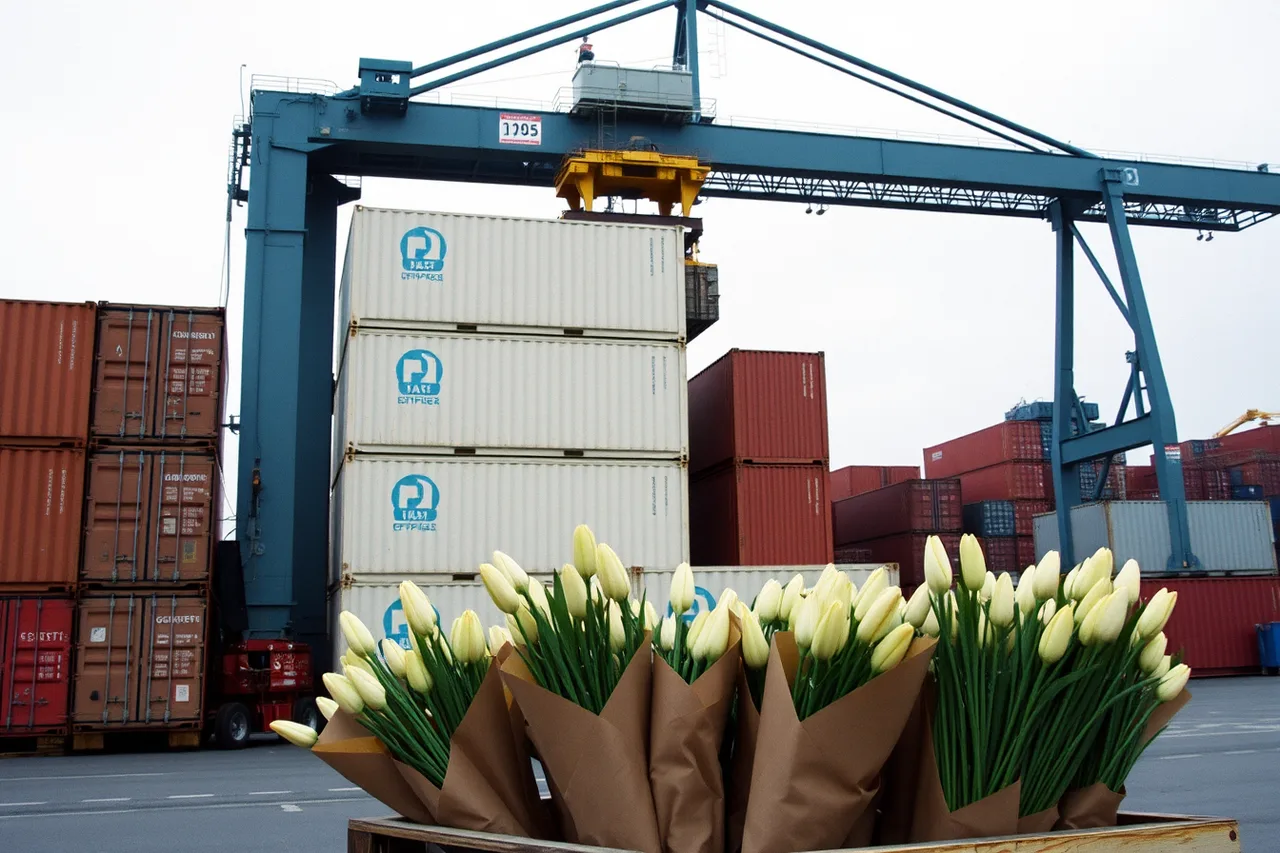
Port access does not mean cheap flowers. It means your cost structure is built on ocean freight, terminal handling, drayage and storage rather than on domestic trucking. Those line items behave differently through the year.
Ocean freight is quoted per container or per cubic metre. Consolidating with other buyers is the usual way to fill a container.
Terminal handling and drayage are charged at the port and again when the container moves to a bonded warehouse or your broker's facility. PSA Halifax runs the Atlantic Hub at the South End and the Fairview Cove terminal, and both levy these charges on every shipment. Ask your broker which terminal your container is on before you book drayage.
Cold chain matters more than the tariff line. Flowers that sit on a dock in July lose vase life, and lost vase life is a cost you eat in the cooler, not on the invoice.
For a fuller picture of how these costs land in your books, the pricing and profit side of the business is where port math turns into shelf price.
The five Halifax port and border charges in a landed cost
Halifax port and border charges
| Cost line | When it applies | Typical amount and behaviour |
|---|---|---|
| Ocean freight | Every sea shipment | CAD 3,500 to 5,000 per 40 ft reefer, falls with volume |
| Terminal handling | On arrival at Halifax | CAD 350 to 500 per container |
| Drayage and storage | Moving to broker or cooler | CAD 250 to 400, rises with delay |
| Customs duty | On release | 6 percent of value under MFN, zero under CETA and the Canada-Colombia agreement |
| Broker fee | On release | CAD 95 to 150 per entry plus disbursements |
CBSA clearance steps and broker fees for Nova Scotia florists
Every commercial flower import into Canada has to be accounted for to the Canada Border Services Agency. The import commercial goods into Canada process covers the paperwork, the release request and the final accounting.
Most Halifax shops use a licensed customs broker. National brokers with Halifax offices include Livingston International and Cole International. The broker files the entry, posts security and releases the goods, and charges a fee per entry plus disbursements.
Broker fees are the quiet cost. A fee that looks small on a large shipment becomes a real percentage on a small one, which is why order size is a pricing decision.
Duty depends on the classification of the goods. Cut flowers sit under specific headings in the Canadian customs tariff, and the rate depends on the tariff item and the country of origin.
Fresh cut roses sit in tariff item 0603.11, carnations in 0603.12, orchids in 0603.13, chrysanthemums in 0603.14, and other fresh cut flowers in 0603.19. The applied most-favoured-nation rate on those lines is 6 percent.
Under CETA, cut flowers of European Union origin enter at zero. Under the Canada-Colombia Free Trade Agreement, Colombian cut flowers also enter at zero. Where no agreement or preferential program applies, the 6 percent rate stands. Getting the classification and origin right is the difference between a small line and a large one.
The legal framework behind the release and accounting rules sits in the Consolidated Acts, which is where the Customs Act obligations for importers are set out.
If you are registering the business side of this, the Starting a business guide covers registration, numbering and the accounts you will need before your first commercial entry.
Six CBSA clearance steps for a Halifax flower shipment
Six CBSA clearance steps
- Confirm your importer number and register for a business number with the Canada Revenue Agency if you have not already.
- Check the tariff classification and origin for each variety before you order, not after.
- Appoint a licensed customs broker and give them a standing authority to act.
- Send commercial invoice, packing list and any phytosanitary certificate to the broker before arrival.
- Let the broker file the release request and pay duty, GST and the broker fee.
- Keep the entry documents for your records and reconcile the landed cost against the invoice.
Worked example
A Halifax shop imports 40 boxes of mixed cut flowers with a commercial value of CAD 10,000, or 20,000 stems. The shipment moves in one 40 ft reefer from Rotterdam.
Typical charges on that box:
Total landed cost: CAD 15,340. Divide by 20,000 stems and the landed cost is CAD 0.77 per stem. The wholesale quote for the same stems was CAD 0.50 per stem. Price from CAD 0.77, not from CAD 0.50.
Maritime seasonality and its effect on bouquet sales
Nova Scotia's growing season is short. Local field and greenhouse production peaks from late spring into early autumn, and outside that window the shop depends on imports.
That split drives everything. In July and August you can buy local stems at prices imports cannot match. In January you are paying freight, duty and broker fees on every rose.
Demand peaks do not line up with supply peaks. Valentine's Day and Mother's Day fall when local supply is thin or absent, so those weeks carry the full import cost stack.
December is different again: volume is high, but so is competition for freight space, and delays at the port cost you the week that matters most.
Maritime weather adds risk. A winter storm can delay a truck between the port and your shop, and a delayed perishable shipment is a total loss on that line.
For how these swings interact with stock decisions, the inventory and sourcing question is really a seasonality question in this region.
Nova Scotia supply windows and cost pressure by quarter
Nova Scotia supply windows
| Period | Supply | Cost pressure |
|---|---|---|
| Jan to Mar | Import dependent | High, Valentine's peak |
| Apr to Jun | Local starts | Medium, Mother's Day peak |
| Jul to Sep | Local peak | Low on local stems |
| Oct to Dec | Import dependent | High, holiday peak |
Three pricing adjustments Halifax shops can make
These are the levers that actually move the number. None of them require a new supplier. The values below are examples; set yours from your own entries.
1. Landed-cost markup
Stop marking up the wholesale quote. Mark up the landed cost: wholesale plus freight share, plus terminal and drayage share, plus broker fee share, plus duty.
Build a simple sheet that does this per shipment. Once the landed cost per stem is visible, your arrangement prices follow from it rather than from habit.
A working example is a 60 percent markup on landed cost. At CAD 0.77 per stem, that gives CAD 1.23 per stem before the arrangement work.
This is the core of setting florist prices that survive a bad freight month.
2. Seasonal price band
Set two price bands for the year and publish them internally. The low band runs when local supply is available; the high band runs when you are importing into a demand peak.
For a 12 stem rose bouquet, an example low band is CAD 39.99 and the high band CAD 49.99. Treat those as illustrations, not market prices.
Customers accept seasonal pricing when it is explained once, at the point of order, rather than discovered at the counter.
3. Minimum order size
Set a minimum of four boxes or CAD 1,500 per order, whichever is lower. At the CAD 0.77 per stem above, four boxes of 500 stems cost about CAD 1,540. Hold that minimum through the peak weeks, when small orders are most tempting.
If a customer wants a small special order in February, price it as a special order.
Reviewing the price bands each quarter against actual entries
The point of all three adjustments is the same: to keep profit margins intact when the fixed costs are out of your control. Review the bands each quarter against actual entries.
Working with regional wholesalers to absorb import costs
You do not have to import directly. Many Halifax shops buy from regional wholesalers such as Maritime Wholesale Florist, who already carry the port, brokerage and duty load and spread it across many customers.
That convenience has a price. The wholesaler's margin covers their fixed costs, so your per-stem cost is higher than a direct import, but your risk and your cash tied up in a container are far lower.
The trade-off works best when you book early. Wholesalers allocate limited import volume to standing customers first, and late requests in peak weeks get substituted or refused.
Ask about substitution rules before you commit. If a variety is unavailable, what arrives instead, and at what price? A written rule protects both sides.
For shops weighing direct import against wholesale, the florist suppliers comparison is worth doing with your own landed-cost numbers in hand.
The regulatory and program side of running the business, from registration to employer obligations, sits in the Business and industry portal and is worth a periodic check as rules change.
A workable split
Many Nova Scotia shops run a hybrid: direct import for the high-volume varieties they know they will sell, and wholesale for the rest. That keeps the fixed costs on the predictable lines and the flexibility on the unpredictable ones.