Guides
Florist Startup Costs, Pricing and Operations
A florist startup guide to U.S. sourcing, startup costs, bouquet pricing, staffing, licensing, imports and delivery operations.
What to take away
- Price a bouquet from stem cost per bunch plus labour, waste and delivery, not from a competitor's shelf price.
- Coolers and vans hold flowers at 2 to 5 C; a broken cold chain costs more than the refrigeration.
- Budget the launch before the leasecooler, van, opening inventory and three months of working capital.
- Imported stems need a phytosanitary certificate from the origin country's plant health authority and a customs entry cleared before the shipment lands.
- Track shrinkage, average order value and stem-to-sale conversion monthly, because those three move first.
A florist shop sells perishable inventory on a deadline. Every stem has a clock on it and every order has a delivery window. That combination, not marketing, is what decides whether a new shop survives its first Valentine's Day.
Sourcing stems and holding them
Most US shops buy through regional wholesalers, direct farm programs or import brokers. Kennicott Brothers, Mayesh and Delaware Valley Floral Group are large US wholesale houses, and direct farm programs such as Florabundance sell by the box. The choice sets your lead time, your minimum order and how much you throw away.
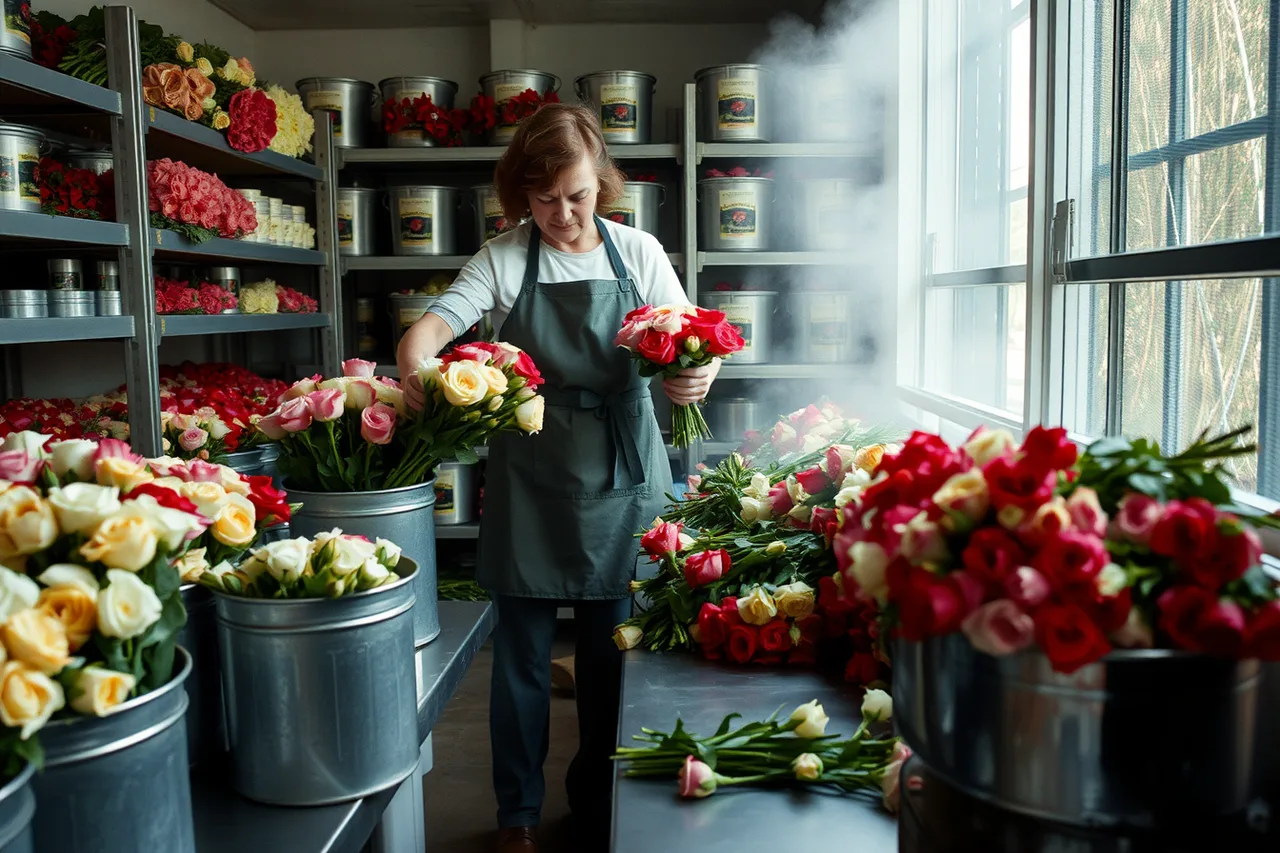
Wholesale buckets arrive mixed quality. Buyers sort on arrival, grade what can hold a week, and route the rest into same-day work. A bunch that sits two days before processing loses vase life you already paid for.
Cooler temperature sits between 2 and 5 C for most cut stems, with ethylene-producing fruit and produce kept out entirely. Ethylene gas from a single ripe banana will shorten carnation and gypsophila life noticeably.
Vans need refrigeration too. An unrefrigerated van in July turns a two-hour delivery route into a wilted-stock write-off, and the customer sees it before you do.
Startup costs before the first order
The ranges below are typical US planning bands, not quotes. They are US figures because the US is this site's main market, and Canadian budgets differ by province, exchange rate and local lease demand.
| Item | Typical US range | What moves it |
|---|---|---|
| Retail lease, 1,000 to 1,500 sq ft | $1,800 to $5,500 per month | Metro, foot traffic, build-out, term |
| Walk-in cooler, 8 by 10 ft installed | $6,000 to $14,000 | New panels or a used box, compressor, install |
| Refrigerated van, used | $18,000 to $35,000 | Age, mileage, reefer unit, upfit |
| Opening inventory | $3,000 to $8,000 | Opening season, species mix, supplier terms |
| Tables, buckets, tools and POS | $2,500 to $7,000 | Used fixtures or new, software subscription |
Those five lines run from roughly $50,000 to $130,000 across the first year. Add three months of rent, wages and insurance as working capital.
Pricing a bouquet that pays
Build the price from the stem up. Cost per bunch divided by stems per bunch gives stem cost. Multiply by stems used, add wrap, ribbon and card, add labour minutes at your own hourly rate, then add delivery and a waste allowance.
Waste is the line most new shops leave out. If one bouquet in ten is unsellable by the time it reaches the customer, that loss belongs in the price of the nine that sell.
Set a target gross margin and check it against real invoices monthly. If the margin slips, the cause is usually stem cost creep, over-generous recipes or discounting on slow days.
Underpriced bundles are the classic failure. A $40 arrangement built from $28 of stems and 25 minutes of designer time loses money before rent.
Five numbers show whether the model holds.
| Metric | What it shows | Where it comes from |
|---|---|---|
| Shrinkage | Stems thrown out before sale | Cooler log and waste count |
| Average order value | Whether bundles and upsells work | POS daily report |
| Stem-to-sale conversion | Stems bought against stems sold | Purchase invoices against POS |
| Delivery cost per order | Whether routes are efficient | Fuel, van time, driver hours |
| Repeat customer rate | Whether the shop earns a second order | POS customer records |
Review these on the same day each month. A metric that moves without an explanation is the one to chase.
Worked example: two price points
Take a mixed arrangement using 12 roses at $1.80 per stem, 6 stems of filler at $0.40 and 4 stems of greenery at $0.55. Stems total $26.20. Wrap, ribbon and card add $3.50. Designer time at 30 minutes and a $28 hourly rate adds $14.00. Delivery on a shared route adds $8.00.
Subtotal is $51.70. Add a 12% waste allowance, $6.20, giving $57.90. At a $95 retail price the gross margin is $37.10, or 39%. If your target is 55%, the recipe, the stem cost or the price has to change.
Now hold the cost and move the target instead. At a 55% margin the price is $57.90 divided by 0.45, which is $128.67, so the ticket rounds to $129.
At $145 the same arrangement returns $87.10, or 60%. The gap between $95 and $129 is the margin problem in full, and no competitor's shelf price will show you where it went.
Substitute your own stem costs, hourly rate and waste percentage. The arithmetic is the point, not the numbers above.
Customers and average order value
Demand-side planning matters alongside costs. Most retail florists sell to three groups: repeat local buyers, event and wedding clients, and corporate accounts. Repeat buyers cost less to serve, so a card or receipt that makes the next order easy beats a discount flyer.
Average order value moves faster than customer count. A $95 arrangement becomes $118 when the buyer adds a vase and a handwritten note, and the same stems and designer minutes earn $23 more. Bundled vases, a short subscription and a delivery minimum lift the average without new traffic.
Record the order source in the POS from day one, because marketing spend follows whatever channel is easiest to notice.
Staffing the shop and the rush
Floral designers order, process, arrange, price, display and care for flowers. They consult customers and coordinate deliveries. This is according to the U.S. Bureau of Labor Statistics. Demand clusters around holidays and events, which shapes both schedules and overtime.
A working shop splits roles: buyers, processors who strip and hydrate, designers, event installers and drivers. In a small shop one person wears three of those hats, and the schedule has to say which hat is on during a wedding week.
Seasonal hires for Valentine's Day and Mother's Day fall under the Fair Labor Standards Act and state wage rules. Many states index their minimum wage each year, so a hire in January 2027 needs the 2027 rate, not the 2026 one.
Licensing, tax and records
Start with the state. A general business licence comes from the state or the city, a sales tax permit comes from the state department of revenue, and signage or food-handling permits come from the city or county. Most states tax retail flower sales and delivery charges, so register and check the rate for your county.
In Canada, the second market on this site, incorporation comes first at the provincial or federal level. GST/HST registration follows once revenue passes the small-supplier threshold, along with CRA payroll accounts and provincial tax on some inputs.
Recordkeeping is not optional. The IRS guidance on records is a useful checklist even outside the US: keep the documents behind purchases, sales, payroll and assets. The IRS starting-a-business page covers structure and tax IDs, and the SBA business guide walks through planning, launch and growth.
Cross-border stems and customs
US imports begin with a phytosanitary certificate from the plant health authority in the country of origin, plus a customs entry filed with US Customs and Border Protection.
USDA APHIS sets the plant health rules and lists the species and origins that also need a written import permit in its Cut Flowers and Greenery Import Manual. That manual is revised, so work from the current edition.
Canada works the same way through different agencies. The Canadian Food Inspection Agency sets the plant health requirements and the Canada Border Services Agency handles the entry.
Duty depends on classification and origin. Cut flowers enter under HTS heading 0603, and qualifying stems from Colombia may enter duty free under the US-Colombia trade agreement while other origins pay the general rate.
Rates have moved in recent years, so do not price an import order on last year's assumption. A customs broker such as Livingston International or Expeditors can confirm the rate for a specific shipment.
A held shipment of roses the week before Valentine's Day is unrecoverable, so confirm species, origin and paperwork before the stems are cut.
Delivery, capacity and cash
Delivery routing through northern winters needs a plan for vans that will not start and roads that close. Build slack into the promise, not into the apology.
Capacity is people times hours minus breaks, rework and disruption. A shop that books 40 wedding installs on a Saturday with two designers has sold capacity that only exists on a perfect day.
Cash runway is the quiet killer. Deposits on wedding contracts fund the flowers for that wedding, so a busy spring can still leave you short in July if the deposits were spent on rent.
Next steps before you sign a lease
- Price the lease, cooler, van and opening inventory with real quotes.
- Register the business, the state sales tax permit and payroll accounts.
- Open supplier accounts and engage a customs broker before the first imported order.
- Hold three months of rent and wages as working capital.
- Soft launch, then review shrinkage, average order value and stem-to-sale conversion after 30 days.
A shop that runs on a written model it actually follows, priced from real stem costs and staffed for the holidays it knows are coming, is the one that reaches its second year.
Start with the florist business plan structure before committing to a lease or a cooler.
Common questions
How much does it cost to open a florist shop?
US planning bands run from roughly $50,000 to $130,000 for the first year. Lease rates, new versus used equipment and opening inventory drive the spread. Build the budget from quotes, and add three months of rent and wages as working capital.
Do I need a licence to sell flowers?
Most US states and cities require a general business licence, and most states require a sales tax permit before the first sale. Confirm the list with your state business registration office and your city licensing office. In Canada, the provincial or federal registry comes first, then GST/HST registration.
Can I import flowers directly?
Yes, but US imports need a phytosanitary certificate from the origin country's plant health authority and a CBP entry. Some species also need a USDA APHIS import permit. Canadian imports need CFIA plant health clearance and a CBSA entry.
What software does a florist need?
A POS that handles delivery windows, a website with order cutoff times, and an accounting package that tracks inventory and payroll. Floral-specific systems such as Floranext, Curate and Details Flowers Software handle timed delivery and stem-level inventory. Compare on delivery scheduling, inventory by stem, and reporting, because generic retail POS systems often cannot handle timed delivery.